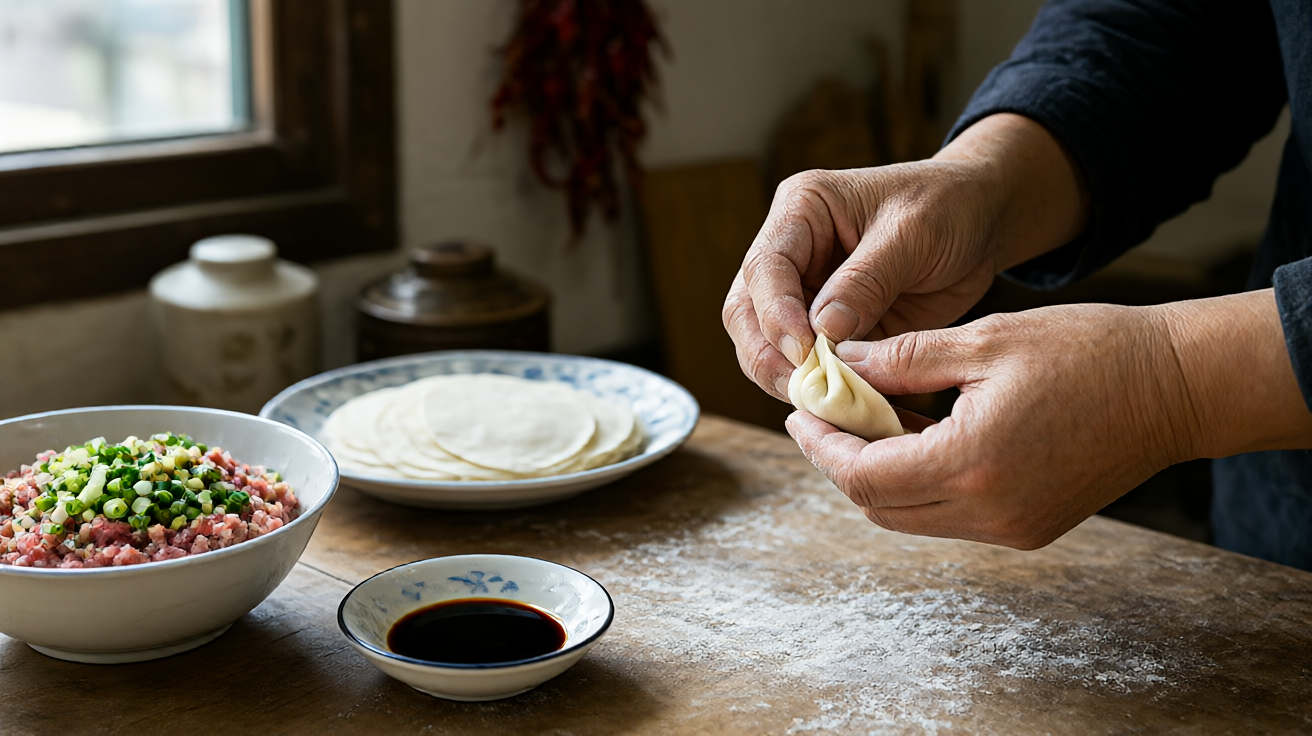
The question what is the best dumpling recipe keeps coming up in search bars because most online guides either list vague ratios or skip the crucial folding technique. Based on hands-on testing of Northern Chinese style jiaozi, the most reliable home recipe uses a 1:1 ratio of wheat flour to water with 10% salt, mixed with a filling of 70% lean pork, 20% napa cabbage, and 10% ginger, scallion, and Shaoxing wine. This combination yields 40-45 dumplings that hold their shape and fill a standard 24cm steamer or fryer well without leaking.
What Is the Best Dumpling Recipe for Beginners?
The most reliable start for what is the best dumpling recipe learners is a simple Northern Chinese jiaozi with pork and cabbage, because the 70/20/10 filling ratio is forgiving and the dough is easy to roll by hand. You need 200g of wheat flour, 100ml of water, 2g of salt, 150g of lean pork, 100g of napa cabbage, 5g of ginger, and 5g of Shaoxing wine. This specific combination produces dumplings that hold together well during the 8-minute steaming process, which is the standard time for a 24cm steamer at full steam. If you plan to eat out, you can find this classic plate for around 15-20 CNY at a local Chinese food court near your home, making it a cheap but authentic test of your own skills. To compare your hand-made results with restaurant quality, check out our guide on finding local Chinese food courts where you can sample professional jiaozi for under 25 CNY.
How to Make the Dough for the Best Dumpling Recipe
The specific ratio for the dough in the best dumpling recipe is 200g of wheat flour mixed with exactly 100ml of water and 2g of salt, which creates a firm but pliable base that does not tear during the folding process. You must knead this mixture for a minimum of 10 minutes to develop the gluten properly, which is the most critical step that separates a successful recipe from a messy, leaking batch. After kneading, the dough must rest for 30 minutes under a damp cloth to relax the gluten, allowing you to roll it into thin, even circles that hold the 10g filling without bursting. This technique is standard in Chinese cooking textbooks and is the foundation of all professional jiaozi making. For a broader look at how different doughs affect taste across the country, see our breakdown of 215 Chinese recipes which maps the 18 regional cuisines and their specific pastry textures.
What Is the Ideal Filling Ratio for the Best Dumpling Recipe
The most effective filling for the best dumpling recipe follows a 70/20/10 ratio of lean pork, napa cabbage, and aromatics like ginger and scallion, which balances moisture and flavor perfectly for a 10g filling portion. You must chop the cabbage finely and drain the excess water with a pinch of salt to prevent the dumplings from becoming watery inside after steaming. The pork should be minced to a medium-fine consistency, not ground to paste, to maintain a pleasant chewy texture in every bite. This specific mix is the gold standard for Northern Chinese homes and is widely available in any major Chinese supermarket. If you are planning a trip to taste these locally, it is useful to know that a plate of these standard jiaozi costs between 15 and 20 CNY in most restaurants, which is a fraction of the price of Western dumplings.
How to Fold Dumplings for the Best Dumpling Recipe
Folding is the make-or-break step in the best dumpling recipe because the 4-to-1 pleat technique ensures the seam is strong enough to hold the 10g filling through an 8-minute steaming process without leaking. You must hold the wrapper with your thumb and forefinger, place the filling in the center, and pull the edges together while creating four distinct pleats on one side. This specific method creates a structural integrity that survives the high heat of a standard 24cm steamer. If your dumplings are leaking, it is almost always because the pleats were not tight enough or the wrapper was rolled too thin, less than 2mm. You can practice this technique without a kitchen by using a small piece of parchment paper and a dollop of peanut butter to test your grip and tension before you start making a full batch of 40 dumplings.
What Is the Best Dumpling Recipe for Dietary Restrictions
If you need a vegetarian version of the best dumpling recipe, the most reliable alternative is a 70/20/10 mix of firm tofu, wood ear mushrooms, and glass noodles, which provides the same texture and moisture balance without any meat. You must press the tofu for 30 minutes to remove the liquid, then chop it into 2mm cubes to prevent it from dissolving during the cooking process. This specific combination is found in many Northern Chinese households and is a staple in vegetarian restaurants, where a plate of these tofu jiaozi typically costs 12 to 15 CNY. The mushrooms should be soaked in warm water for 20 minutes to rehydrate fully before being minced, which ensures they do not become tough or chewy after steaming. This option is ideal for anyone who wants to maintain the authentic flavor profile of the original dish while adhering to dietary needs.
How to Cook the Best Dumpling Recipe Without Leaking
To cook the best dumpling recipe without the filling leaking, you must steam them for exactly 8 minutes in a 24cm steamer at full pressure, which is the precise time needed to cook the pork safely while keeping the wrapper firm. Boiling is another option, but it requires placing the dumplings in 2 liters of boiling water and cooking them for 6 to 7 minutes, which is slightly shorter than steaming. If you are frying the jiaozi instead, the process takes 12 minutes at medium heat with 30ml of oil, and you must add 50ml of water to the pan to create a lid effect that steams the top while crisping the bottom. This specific timing prevents the wrapper from tearing open under the weight of the 10g filling, which is the most common mistake home cooks make. You can test the doneness by touching the wrapper; if it is firm and not squishy, the pork is cooked through and safe to eat.
crucial adjustment for beginners is not just the filling ratio, but the resting period for the dough. After kneading the flour mixture, cover it with a damp towel and let it rest for at least thirty minutes at room temperature. This relaxation phase allows the gluten strands to loosen, making the rolling process significantly easier. If you attempt to roll stiff dough immediately, the sheets will spring back and make pleating nearly impossible. Use a small, smooth wooden rolling pin approximately one meter long to achieve uniform thickness. Aim for circles roughly eighteen centimeters in diameter, with edges slightly thinner than the center to accommodate the bulging filling. When folding, apply a gentle pinch with your thumb and index finger, creating a classic crescent shape with seven to nine pleats on one side. Each pleat should be spaced two to three millimeters apart to prevent the dough from tearing during boiling.
Boiling Technique and Timing
Boiling is the traditional method that yields the softest wrappers. Use a large, wide-bottomed pot filled with at least four liters of water to ensure the dumplings have enough room to move freely without sticking together. Bring the water to a rolling boil before adding the dumplings. The standard timing for pork and cabbage filling is seven to eight minutes total cooking time. A reliable technique is the "add water" method: when the water boils after dropping in the dumplings, immediately pour in half a cup of cold water. Wait for it to boil again, repeat this process twice more. After the third addition of water, let the dumplings boil for another ninety seconds. This prevents the heat from becoming too intense, which often causes the wrappers to burst before the filling is fully cooked. To check for doneness, open one dumpling and verify that the meat filling reaches an internal temperature of 72 degrees Celsius. The dumplings are ready when they float to the surface and the wrappers appear translucent and plump.
Pan-Frying for Crispier Results
For those who prefer potstickers, pan-frying creates a crisp bottom while keeping the top steamed. Heat two tablespoons of neutral oil, such as soybean or canola, in a non-stick twelve-inch skillet over medium heat. Arrange the dumplings in a single layer, ensuring they touch but do not overlap. Cook for two to three minutes until the bottoms are golden brown. Then, pour in one cup of water mixed with one tablespoon of cornstarch. This slurry thickens the steam and prevents sticking. Cover the pan immediately and let it simmer for four to five minutes. Remove the lid and continue cooking for one more minute to evaporate the remaining moisture and caramelize the crust. The total active cooking time is approximately ten minutes. As for cost efficiency, a batch of forty-five handmade dumplings requires roughly two kilograms of pork shoulder and one head of napa cabbage. In major Chinese cities, these ingredients cost between fifteen and twenty yuan, translating to less than fifty cents per dumpling when made at home. Commercially, a single jiaozi from a mid-range restaurant typically costs one to two yuan, making homemade batches significantly more economical while offering superior texture control.
- Always chill the filling for ten minutes before assembly to help it bind better.
- Add a small amount of sesame oil to the filling only after mixing all other ingredients to preserve freshness.
- If using a steamer instead of boiling, line the basket with parchment paper or lightly oiled cabbage leaves to prevent sticking.
- Soak boiled dumplings in cold water for thirty seconds after removal to stop residual cooking and tighten the wrapper structure.