Buying souvenirs is the easy part; getting them home is where trips get expensive. I have posted parcels out of China six times now — twice from a China Post (中国邮政) counter in Chengdu, three times with SF Express (顺丰) pickup at a hotel desk, and once badly, from a 菜鸟驿站 that turned out to handle domestic parcels only. These are the nine questions I get asked most, answered in the order they come up.
Can a tourist mail things home from China, or do I need a residence permit?
You can, with a tourist visa. Bring the same passport you entered on — the one your hotel registered — plus your recipient's name, address and phone number written out in Latin letters. The counter form asks for sender name, contents, quantity and declared value. No residence permit, no tax number, nothing extra. I have done it on an L visa every single time, including a 2.3 kg box sent from a small post office in Chengdu on a Thursday morning.
How much does it cost to send a 2 kg box?
My last one: 2.3 kg of tea, paper bookmarks and a folding fan, Chengdu to Germany by EMS — ¥268, box included. Cheaper than I expected. Sea mail (水陆路) is roughly half that price and takes 30–60 days. Couriers quote by the half kilo and often beat EMS on small light parcels to nearby countries, especially Japan, Korea and Southeast Asia. Always ask for two quotes at the same counter; the difference between EMS and 航空小包 on a 1 kg box has been ¥90 for me.
How long does it actually take?
EMS runs 7–15 days to Europe and North America in normal months. SF Express international was 4–8 days to major destinations. Sea mail took 41 days once. Add a week around Chinese New Year and around 双十一 in November, when the whole network is moving gifts and returns instead of your teapot. My rule is to post it at least three weeks before I fly home, so that if customs holds it, I am still reachable and still awake in a compatible timezone.
What is not allowed to go in the mail?
Short answer: energy and pressure. Lithium batteries and power banks (充电宝) do not go in air mail at all, aerosols and sprays do not, lighters do not, and liquids are limited by volume. Counterfeit branded goods — the "designer" bag from the night market — get seized at export, and you lose both the item and the postage. Fresh food, meat and seeds are refused. Anything expensive: keep the receipt in your pocket, not in the box.
Can I send tea and tea ware home?
Tea is the single easiest Chinese souvenir to post: dry, light, factory-sealed, and declared on the form simply as 茶叶. Tea ware is fine too, just heavy and fragile — my Yixing teapot travelled in a double box with six centimetres of bubble wrap and arrived intact. Two cautions: buy tea that is labelled rather than scooped into a plain bag at a market, because labelled packing clears more smoothly; and never mail the tea caddy sealed with the shop's inventory tag still inside a wrapped gift.
Will I have to pay import tax when the parcel lands?
That depends on the de minimis threshold in your own country and the value you declared. Declare honestly and match the number to your receipt. Under-declaring is exactly what triggers a hold, and a hold means storage fees that can exceed the duty you were avoiding. If tax is owed, the postal service or courier usually collects it from the recipient before delivery — nobody flies you back to pay it.
China Post, SF Express, or drop it at a 菜鸟驿站?
China Post / EMS has the widest reach and is usually cheapest above 3 kg, with tracking on their own site. SF Express costs more but collects from your hotel lobby, which is worth a lot when the box weighs 6 kg — book it through WeChat and the courier arrives with the paperwork already filled. A 菜鸟驿站 (Cainiao station) is a pickup point for deliveries coming to you; most of them are not set up for international outbound parcels. Do not build your plan around one.
How do I track it after I have already left China?
Your tracking number is printed on the receipt: EMS uses letter-prefixed codes ending in CN, SF uses a long numeric one. Both are readable on 17TRACK and on 快递100 (kuaidi100.com), which I find more reliable from abroad than most carrier websites. Photograph the receipt and the number the moment you get it — that little slip of paper is the only thing that lets anybody, including your recipient, query the parcel later.
Isn't it cheaper to just pay for an extra checked bag?
Under about 3 kg, no. A second international bag typically costs ¥300–800, and you still have to drag it through the airport at the worst possible moment. Above roughly 8 kg the maths flips and checking it in wins. There is a third option people forget: buy at the departure airport airside and carry it on, which avoids postage entirely — it only works for things actually sold past security, and never for liquids, tea knives or anything with a battery inside.
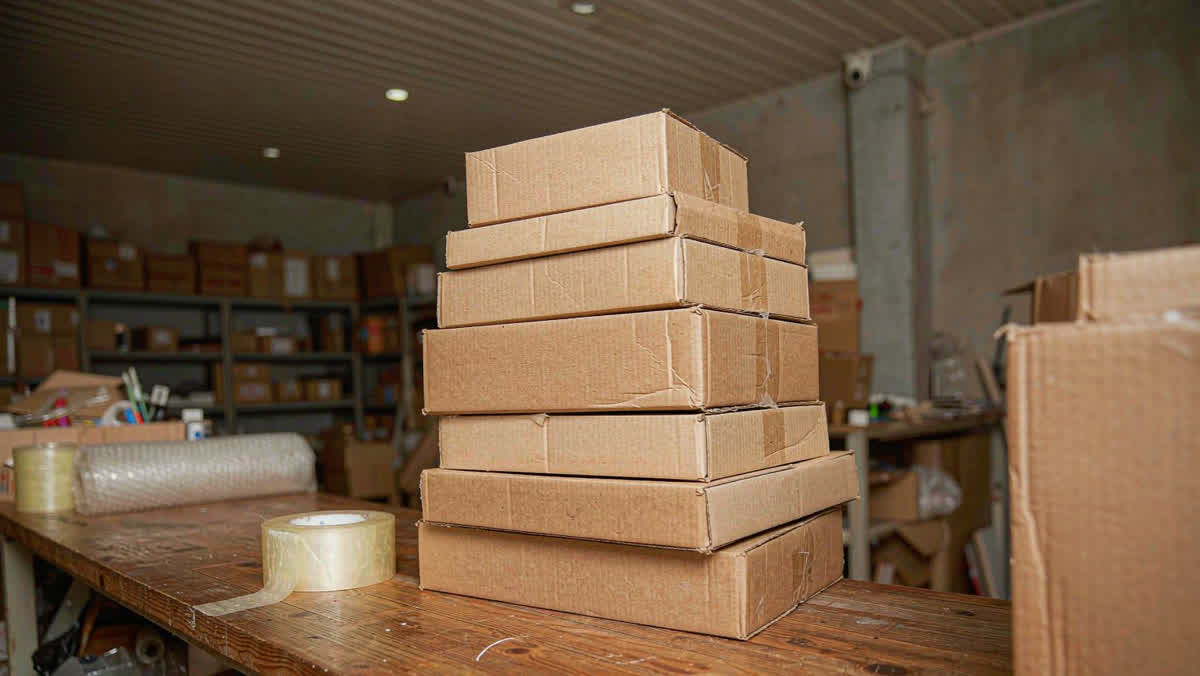
Three things that mattered more than price
Box it before you arrive at the counter. Post offices sell boxes, but they are rarely the strong double-wall kind, and the queue behind you is not patient while you wrap.
Photograph the contents before closing the lid. Two reasons: the parcel-insurance conversation becomes trivial, and you can write an accurate declaration from the photo instead of guessing what was in layer two.
Write the recipient's phone number with the country code. Failed deliveries are almost never lost parcels — they are parcels nobody could phone anybody about. A missing +49 or +1 at the start is worth more to your delivery than any courier upgrade you can pay for.
Sending things home from China is not risky, it is just badly explained. Six parcels in, none have gone missing — the ones that went wrong were the ones where I rushed the paperwork at the counter.