Spring Festival, usually called Chinese New Year abroad, is the most important holiday in the Chinese calendar. It is less a single day than a season — preparations begin weeks ahead and it formally ends with the Lantern Festival fifteen days later.
Why the date changes
The date follows the traditional lunisolar calendar, so it falls between late January and mid-February. Each year is associated with one of twelve zodiac animals, cycling through Rat, Ox, Tiger, Rabbit, Dragon, Snake, Horse, Goat, Monkey, Rooster, Dog and Pig.
What people actually do
- Reunion dinner — the central event on New Year's Eve, when families travel enormous distances to eat together. Fish is served because the word sounds like “surplus.”
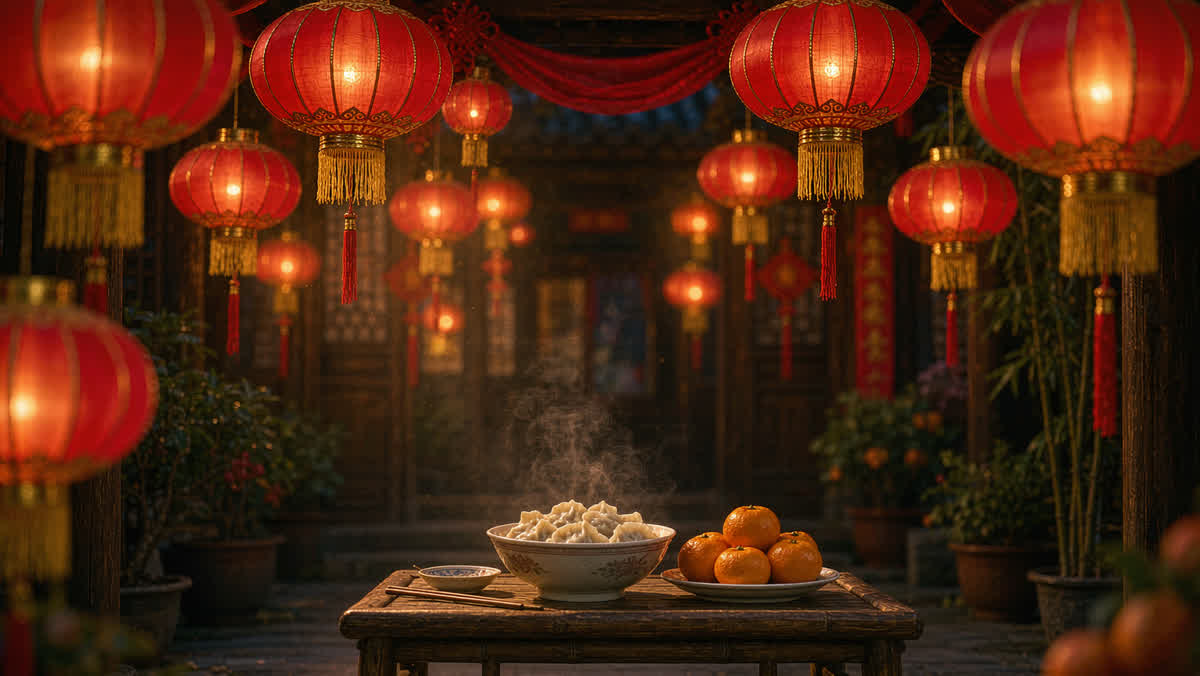
- Red decorations — couplets on doorways and paper cutouts in windows. Red symbolises good fortune.
- Red envelopes — money in red packets, given to children and younger relatives.
- Fireworks and lion dances — traditionally to drive away misfortune; in many cities now partly replaced by organised displays.
Travelling during Spring Festival
It is the world's largest annual human migration. Trains and flights sell out weeks ahead, and many small shops and restaurants close for days. But it is also when cities are decorated, and temple fairs are at their liveliest.
If you are invited to a Chinese family's New Year dinner, bring fruit or a small gift, and never give a clock — the phrase “giving a clock” sounds like attending a funeral.
Frequently asked questions
Why does Chinese New Year fall on a different date each year?
It follows the traditional lunisolar calendar, so it lands somewhere between late January and mid-February, with each year tied to an animal.
Is travelling during Spring Festival a good idea?
It is the world's largest annual human migration: trains and flights sell out weeks ahead, and many small shops and restaurants close.