China has close to 4,200 pairs of expressway service areas — one roughly every 50 kilometres, going by what the transport ministry said at a January 2026 briefing. Most drivers I know use two of the things inside them: the toilet and the pump. That is a waste, not because the rest is glamorous, but because knowing what is in there changes what a 400-kilometre day feels like.
I have driven enough of these roads, mostly in Jiangxi, Hubei and the Yangtze delta, to have a fixed routine by now. Below is what a Chinese highway service area actually contains, what it costs, and the four mistakes I still watch people make at the entrance.
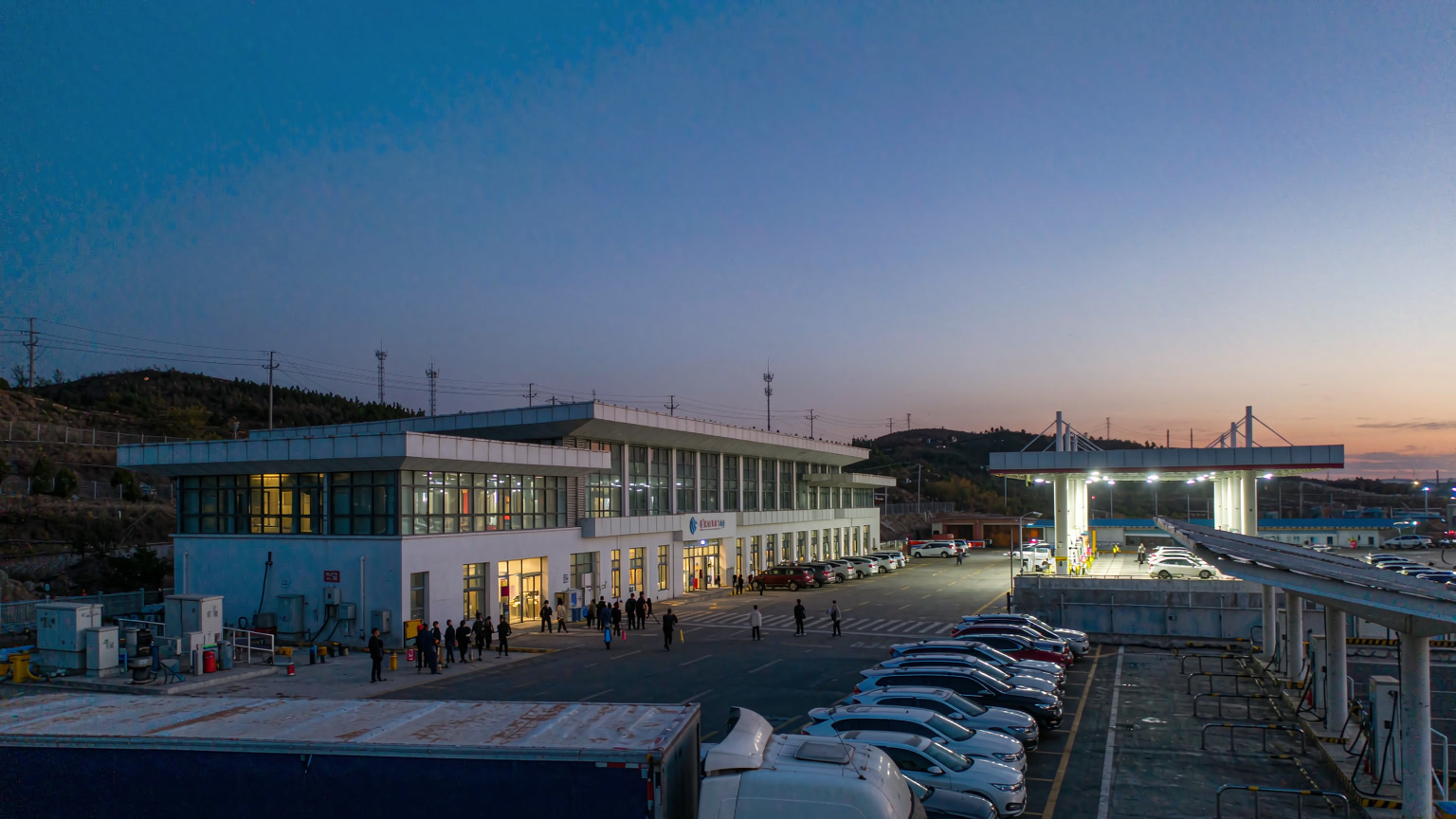
The eight things worth knowing about
The toilets decide whether the stop was worth it
Squat pans still outnumber seated cubicles, and the ministry's 2026 plan to push seated cubicles past 20% shows how lopsided the split is. Larger stops have a 第三卫生间 (accessible and family cubicle) and a 母婴室 (nursing room), both usually clean and usually empty. Bring your own paper — the dispensers are not reliable, and I keep a pack in the door pocket now. This improved a lot after the national toilet upgrade that began in 2015; the reputation just has not caught up with the buildings.
Free boiling water, and the noodle economy around it
Almost every stop has an 开水间 — a boiling-water room with an industrial boiler and a 小心烫伤 (mind the scalding water) sign. It is free and nobody checks whether you bought anything. This is why you see people eating cup noodles in the rest shelter: a ¥5 pot and free boiling water is the cheapest hot meal on the expressway, and on a wet February night it beats most of what the counters sell. The tap is stiff and the water is genuinely at 100°C, so hold the lid down for a minute.
The pump: four words are enough
Fuel sits on one side, attendants pump it, and the whole exchange is 92加满 (fill it with 92) or 加200 for ¥200 worth. Above it are 95 and 98; 0号柴油 is for diesels. The last times I filled up in Jiangxi, 92 ran around ¥7–8 a litre, revised every ten working days — I stopped tracking it, so read the board. Do not ask anyone to fill a jerry can: loose petrol in a container means paperwork, and the answer will be no.
EV charging: the coverage is solved, the queue is not
Charging equipment had reached 98.8% of service areas by early 2026, and the plan for the year adds more than 10,000 charging guns, over a quarter of them high-power. Coverage is no longer the problem. Queues are. On an ordinary Tuesday you plug in immediately; on the first morning of a holiday the wait is real, so I charge at the stop before I actually need to. A few places now run mobile charging vans for exactly those days.
Food: the canteen tray, or the local counter
One model is the canteen tray — rice plus two dishes, ¥25 to ¥40 — dependable and rarely memorable. The other is local: at Wuchangyu service area on the Wuhan–Huangshi expressway people order steamed Wuchang fish, a genuine Hubei dish rather than a motorway version of one. I take the local counter whenever there is one and regret it about one time in three.
The convenience stall covers what you forgot
Sinopec runs 易捷 (Easy Joy) stalls at its own pumps: drinks, bread, braised eggs, phone cables, sometimes local cakes. Prices run a few yuan above a city supermarket, which seems fair out here. What I actually buy is tissues and wet wipes, because the toilet and the sticky rest-shelter table will both remind me I forgot them.
司机之家: five free things meant for truckers
There are more than 1,000 standardised "driver's homes" across the network, built for long-haul drivers, and they offer five things at no charge: rest parking, reheating your own food, hot water, showers and laundry. Another 600 are due to be built or refurbished in 2026. They are aimed at people who sleep in a cab for a living, not at tourists, but at two of them I was waved in without argument after asking at the counter. I would not count on that — it seemed to depend on whoever was on shift.
And then there are the showpieces
A handful of service areas are destinations in their own right. 阳澄湖服务区, on the shared G2/G42 section outside Suzhou, has four miniature Suzhou gardens — 涵碧, 荷风, 木樨 and 修竹 — a 140-metre canal running through the main hall, 559 parking spaces and something close to 20,000 people a day. Separately, 2026 is supposed to add 60 "open" service areas that connect straight to local roads so nearby towns can use them without entering the expressway. I want to be honest: that is the top sliver. Everything else is concrete, a pump, a toilet and a kettle.
Service area or parking area: the difference matters
Not every signed stop is a full one. In between the big 服务区 there are 停车区 — smaller lay-bys with a few bays and, when you are lucky, a toilet block. Stopping at the wrong one when your tank is low is an hour of your day.
| 服务区 (service area) | 停车区 (parking area) | |
|---|---|---|
| Parking | Large, split by vehicle type | A handful of bays |
| Toilets | Always | Sometimes |
| Fuel & charging | Usually | Rarely |
| Food & shops | Yes | No |
| Boiling water | Usually | Sometimes |
| Typical spacing | About 50 km | Between them, often ~25 km |
The 50-kilometre figure comes from the transport ministry. The 25-kilometre one is my own impression from driving the same few routes — I have never gone looking for the regulation behind it, so treat it as a habit of observation rather than a rule.
Four things that catch people out
The two directions are not connected. Most expressways run separate service areas on opposite sides, and you cannot walk between them without crossing the carriageway. If you are chasing a specific famous stop, check which direction it sits on first — at Yangchenghu, for instance, it is the north zone people photograph.
Holiday toll-free days. Small passenger cars (seven seats or fewer) pay no toll during the four big holiday windows: Spring Festival, Qingming, Labour Day and National Day. Everyone drives. Toilet queues form, the canteen runs out of trays, charging queues start before 10am. If you have to travel then, eat before you are hungry.
Assuming the next one is open. Buildings close for months at a time for refurbishment, and the map apps do not always know. When the tank is low on a thin stretch, stop at the second-to-last one you pass, not the last.
Sleeping overnight. Truckers do it as a matter of routine and car drivers do it too — I have slept in a service area three or four times. Park near the lit main building rather than the back of the lot, and expect a knock from security if you unfold a chair and set up camp. It is tolerated, not advertised.
Where this fits: highway or high-speed rail
Under about 800 kilometres I would take the train and skip all of this — the rail comparison in bullet train or sleeper train covers why. A service area becomes worth understanding when you are driving a stretch the railways serve badly, or travelling with enough people that four tickets cost more than a tank of fuel.
The kettle is the thing I would point a first-timer at: free water at 100°C, every fiftieth kilometre, all day. Once you know it is there, you pack differently.
Are China's highway service areas free to use?
Entering and parking are free — you are already paying for the road through the toll. You pay for fuel, charging, food and shop goods. Boiling water, toilets and parking cost nothing, and there is no system for charging you to stop.
Do Chinese service areas have Western-style toilets?
Both, with squat pans still in the majority. The transport ministry's 2026 upgrade plan aims to lift seated cubicles above 20% of the total, so the balance is shifting. Larger stops add a 第三卫生间 (accessible/family cubicle) and a nursing room. Carry your own paper either way.
Can I pay with a foreign card at a Chinese service area?
Not directly at most stalls. Bind an international card to Alipay or WeChat Pay before you set off and scan as usual; cash also works at fuel counters and canteens. I would not rely on a foreign Visa or Mastercard being accepted at a pump in a rural stretch.
How far apart are highway service areas in China?
Roughly one every 50 kilometres, with the transport ministry putting the total at close to 4,200 pairs. Smaller parking areas (停车区) fill some of the gaps between them. In thinly populated western provinces the gaps run longer, which is worth knowing before you let the fuel gauge drop.
Is the food at Chinese service areas any good?
It varies more than people expect. The canteen tray (¥25–40) is dependable and unmemorable. The better stops now run a local counter serving regional dishes, and those are genuinely worth the stop. I take the local counter when there is one and accept that it misses about a third of the time.
Figures on service area numbers, charging coverage and driver's-home facilities come from the transport ministry's January 2026 press briefing. Prices and opening details are what I have met myself and will drift.