China is the birthplace of tea. Understanding a few basics will change what you order and how you drink it.
Not by colour, but by oxidation
Chinese tea types are defined by how much the leaves are oxidised, and all come from the same plant, Camellia sinensis:
- Green tea — unoxidised, grassy and fresh (Longjing, Biluochun).
- White tea — minimally processed, delicate and floral.
- Oolong — partially oxidised, the widest range of aromas (Tieguanyin, Da Hong Pao).
- Black tea — fully oxidised, malty and robust (what Chinese call hóng chá, “red tea”).
- Pu'er — fermented and aged, earthy, sold in compressed cakes.
Brewing the Chinese way
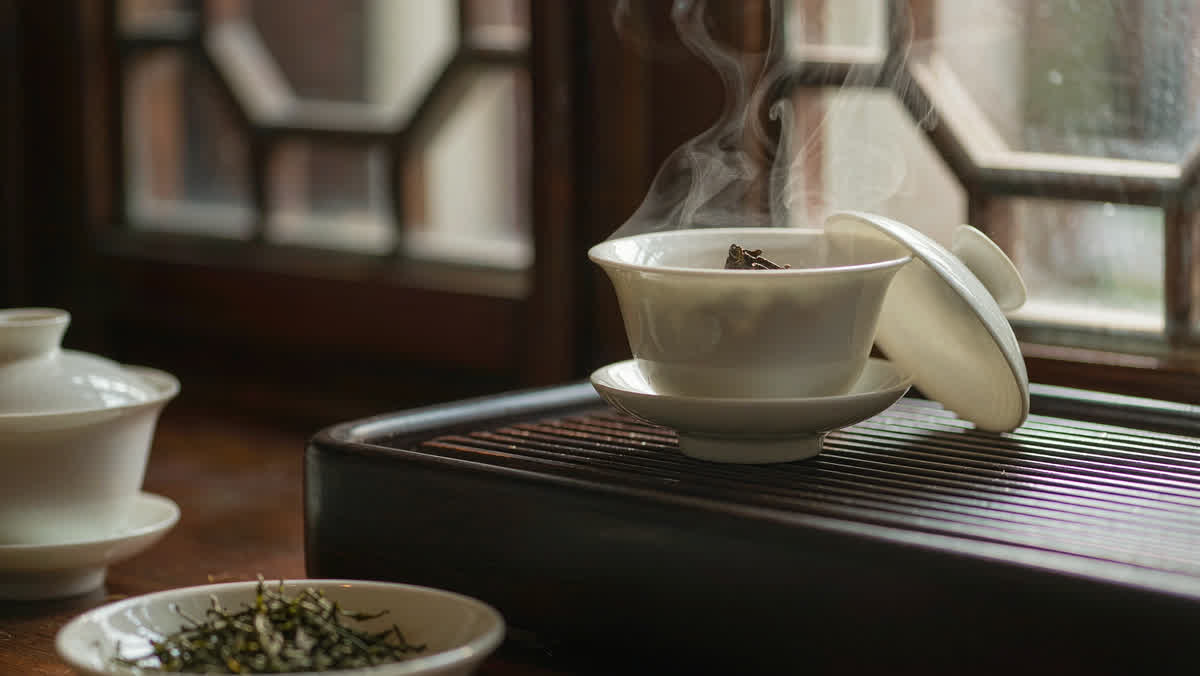
The gongfu method uses a small pot, a high leaf-to-water ratio and many short infusions — often 10–30 seconds each. The same leaves release different flavours across five or more brews. Water temperature matters: around 80°C for green tea, near boiling for black and pu'er.
Etiquette that matters
- When someone pours for you, thank them by tapping two fingers on the table — a quiet, traditional gesture.
- Fill a guest's cup only about seven-tenths full; a full cup means “you may go now.”
- Serve elders or guests first, and never point the spout of the pot at anyone.
Where to try it
Tea houses in Chengdu are the easiest introduction: a pot, a thermos of hot water, and an afternoon. In Hangzhou, the hills around West Lake produce Longjing, China's most famous green tea.
Good tea is not about price. It is about leaf quality, water temperature, and patience — the same leaves taste different in different hands.