China established its first five national parks (国家公园) in October 2021, and the figure that stopped me was not the count — it was the area. Five parks protect roughly 230,000 km², more than the whole of the United Kingdom, and 三江源 (Sanjiangyuan) alone accounts for 190,700 km² of that. I started reading the official numbers because I wanted to plan a trip. Three days later I had no trip, but I had this table, and I understood why area and accessibility are two completely different columns.
The headline number is 230,000 km², and it is misleading
The parks were announced together in October 2021 as China's first batch, replacing a system where scenic areas, nature reserves and forest parks all carried different labels and different bosses. Putting one label on top was the point. But if you read 230,000 km² and start drawing a route, you will draw a route through the least visitable land in the country.
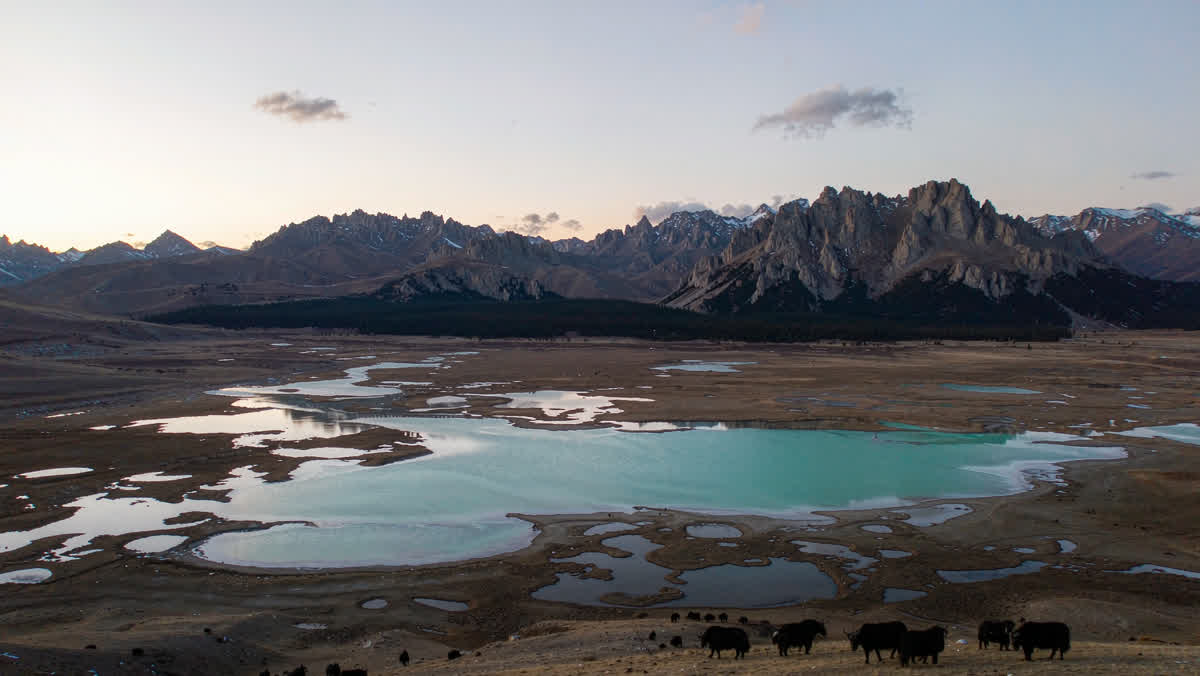
Here is what ended my own plan. Getting to the Yellow River source lakes inside 三江源 means driving about 470 km west from 西宁 (Xining) to 玛多 (Madoi) on good expressway, then another 100-plus km of rough track to 扎陵湖 and 鄂陵湖. A driver in 玉树 (Yushu) quoted me ¥800 a day and added that the track only really dries out after June. I had budgeted five days. The park needed eight and a vehicle I did not have.
The table: all five parks side by side
| Park | Province | Area | Flagship species | Best months | Gateway city |
|---|---|---|---|---|---|
| 三江源 Sanjiangyuan | Qinghai | 190,700 km² | 雪豹 snow leopard, 藏羚羊 Tibetan antelope | Jun–Sep | 西宁 / 玉树 |
| 大熊猫 Giant Panda | Sichuan, Shaanxi, Gansu | 22,000 km² | 大熊猫 giant panda | Apr–Oct | 成都 / 西安 |
| 东北虎豹 Amur Tiger & Leopard | Jilin, Heilongjiang | 14,100 km² | 东北虎 Amur tiger, 东北豹 Amur leopard | Dec–Mar | 延吉 / 珲春 |
| 海南热带雨林 Hainan Rainforest | Hainan | 4,269 km² | 海南长臂猿 Hainan gibbon | Nov–Apr | 海口 / 三亚 |
| 武夷山 Wuyishan | Fujian (partly Jiangxi) | 1,280 km² | 黄腹角雉 Cabot's tragopan; 大红袍 rock tea | Apr–Nov | 武夷山东站 |
Read the area column and the gateway column together, because that pairing is the whole article. 三江源 is 190,700 km² fed mostly by one airport at 玉树, which sits at 3,890 m. 武夷山 is 1,280 km² with a high-speed rail station named after it. Area tells you what is protected; the gateway tells you what you can actually stand inside.
The one park where the headline animal is reliably findable is 大熊猫国家公园. It holds more than 70% of the country's wild pandas — the last national survey put the wild population at 1,864 — spread across three provinces. That is the exception, not the pattern. The other four flagship species are camera-trap animals: real, monitored, and not something you book a ticket to go and look at.
Three things the table cannot tell you
Area includes core zones nobody enters. 三江源 averages above 4,500 m in elevation and most of it is 核心保护区, closed to general tourism. Its three namesakes are the headwaters of the 长江, the 黄河 and the 澜沧江 — the last of which becomes the Mekong. You are not being excluded from a scenic spot; you are being kept out of a water tower.
One park can be three provinces and 500 km apart. 大熊猫国家公园 is the clearest example. Flying into 成都 puts you near the 卧龙 and 雅安 sections. The 佛坪 and 长青 sections are in Shaanxi, a five-hour drive or a separate flight away. Saying "I'm going to the panda park" is like saying "I'm going to the coastline" — you have named a shape, not a destination.
Season decides more than tickets do. 东北虎豹 borders Russia's Land of the Leopard National Park, and the tigers move across that line; the park exists as a cross-border corridor and winter, when the forest is open and tracks show in snow, is when the monitoring happens. Meanwhile Hainan's rainforest closes parts of itself through typhoon season from July to September, and Sanjiangyuan in January is a place of -20°C and frozen ground. Pick your month before you pick your park.
What entry costs, and how booking works
The tickets are not the expense. 武夷山 sells a three-day main-scenic pass for roughly ¥140, and a bamboo raft down the 九曲溪 is about ¥130; the panda sections are in the tens of yuan. The money is in getting there and being allowed in: ¥800–1,000 a day for a car and driver around 玉树 or 玛多, more if you want a guide with working English, plus the acclimatisation days you cannot buy your way out of.
Booking runs through each park's own WeChat mini program or 公众号, with real-name registration using a passport or Chinese ID. For 三江源 in particular, expect to register your route in advance and to transfer to the park's own shuttle at a designated point rather than driving your own car to the lakes. Do this a week ahead in summer, not the night before.
How to turn the table into a trip
Work backwards from what you want to see. Want the animal? 大熊猫国家公园, 成都 or 雅安 side, at the gate before 07:30, because pandas eat early and sleep in the warm half of the day. Want altitude and emptiness? 三江源, June to September, with at least two nights in 西宁 (2,260 m) before you fly to 玉树 (3,890 m) — that 1,600 m jump is the one that ruins people's first day. Want a park that behaves like a holiday? 武夷山: high-speed rail to 武夷山东站, three days, bilingual signage, tea in the afternoon, raft in the morning. Want rainforest? 海南热带雨林 between November and April, the 五指山 section, and accept that the gibbon is something you hear at dawn from 霸王岭 rather than something you photograph.
I have been to two of the five and have firm plans for one more, which is roughly the ratio these parks are designed for. They are not a checklist. Pick the one whose season matches the month you already have off.
The number I carry now is not 230,000. It is three — the days I spent learning that the biggest protected area in the country is also the hardest one to stand inside.