Short version: if you only have time for a few plates, build your trip around five — Peking duck in Beijing, Sichuan hot pot, xiaolongbao in Shanghai, mapo tofu and Lanzhou beef noodles. Five dishes from five regions, and you've already tasted most of what makes China's food hard to replicate anywhere else. Chinese food is far more varied than most first-time visitors expect. Roughly eight major regional cuisines exist, and each has its own flavour philosophy. Here are ten dishes worth building your first trip around.
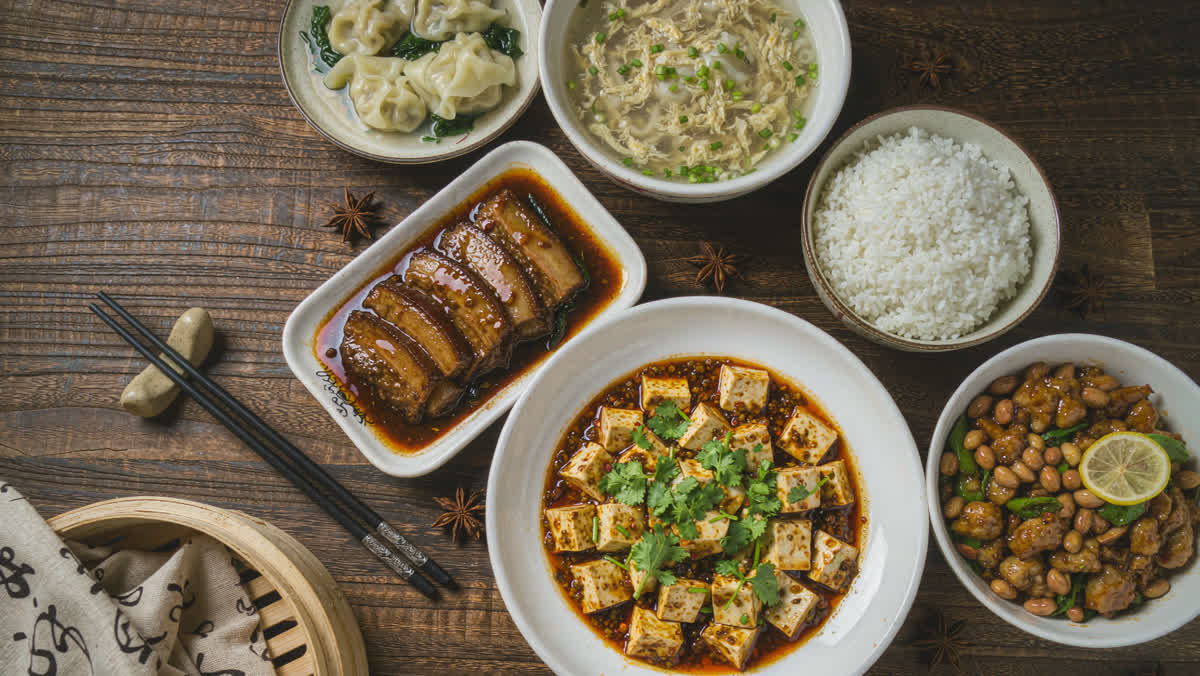
1. Peking Duck (北京烤鸭)
Roasted until the skin is lacquer-crisp, then carved at the table and wrapped in thin pancakes with cucumber, scallion and sweet bean sauce. It originated in Beijing's imperial kitchens and remains the city's signature dish.
2. Mapo Tofu (麻婆豆腐)
A Sichuan classic: soft tofu in a glossy, chilli-and-fermented-bean sauce, finished with Sichuan peppercorn. The signature málà (numbing and spicy) tingle is the point, not a side effect.
3. Dumplings (饺子)
Northern China's staple. Pleated wrappers filled with pork and cabbage or chive, boiled, steamed or pan-fried. In Chinese homes, making dumplings together on New Year's Eve is a family ritual.
4. Hot Pot (火锅)
A simmering pot of broth at the centre of the table; you cook raw ingredients yourself and dip them into a sauce you mix. In Chengdu it is numbing and fiery; in Guangdong it is mild and focused on fresh ingredients.
5. Xiaolongbao (小笼包)
Shanghai soup dumplings. Delicate pleated skins hold pork filling and a pocket of hot broth, which is why the local advice is to bite a small hole and sip the soup first. If the printed menu has you lost, our Chinese Menu Decoder covers the 32 cooking words you'll actually meet.
6. Kung Pao Chicken (宫保鸡丁)
Diced chicken stir-fried with dried chillies, peanuts and scallions. The sweet-sour-savoury balance makes it the most reliably likable dish for travellers wary of heat.
7. Char Siu (叉烧)
Cantonese barbecued pork, glossy and reddish from a marinade of soy, hoisin and honey. Served over rice or in a bun, it is the backbone of Cantonese fast food.
8. Lanzhou Beef Noodles (兰州牛肉面)
Hand-pulled noodles in a clear, long-simmered beef broth with slices of radish, coriander and chilli oil. Noodles are pulled to different widths, from thread-thin to broad ribbons.
9. Sweet and Sour Pork (咕噜肉)
Battered pork in a bright, tangy sauce with pineapple and pepper. Its Western fame is deserved — it is genuinely good when made fresh rather than as takeaway filler.
10. Red Braised Pork Belly (红烧肉)
Pork belly slowly braised in soy, sugar and spices until it trembles. A Shanghai home-cooking icon, rich enough that a few pieces over rice is a full meal.
Tip: if you avoid spice, say "bú yào là" (no chilli). Sichuan peppercorn numbs rather than burns; it is harmless but surprising the first time. And if you assumed Sichuan food is all about heat, our 6 Chinese Food Myths, Corrected has the nuance.
How much do these dishes actually cost?
| Dish | Region | Spice | Approx. price |
|---|---|---|---|
| Peking duck | Beijing | Mild | ¥150–300 (whole duck, for 2–3) |
| Mapo tofu | Sichuan | Spicy-numbing | ¥25–40 |
| Dumplings | Northern | Mild | ¥20–40 |
| Hot pot | Chengdu | Very spicy | ¥80–150 pp |
| Xiaolongbao | Shanghai | Mild | ¥25–50 |
| Kung Pao chicken | Sichuan | Medium | ¥35–55 |
| Char siu | Cantonese | Mild | ¥40–60 |
| Lanzhou beef noodles | Gansu | Mild | ¥15–25 |
| Sweet & sour pork | Cantonese | Mild | ¥40–60 |
| Red braised pork | Shanghai | Mild | ¥50–80 |
The spread is wide, but here's the rule of thumb: a bowl of street noodles costs less than half a Western sandwich, while a whole Peking duck session for 2–3 people lands around ¥200 — comparable to one proper Western restaurant bill for the same group.
Frequently Asked Questions
What are the must-try Chinese dishes for first-time visitors?
Start with Peking duck, Sichuan hot pot, xiaolongbao, mapo tofu and Lanzhou beef noodles. Five dishes from five regions — each one tells a different story about how China actually cooks.
Is Chinese food really as spicy as I've heard?
Only in Sichuan and Hunan. Cantonese, Shanghai and northern Chinese food is mild. You can ask for "bú yào là" (no chilli) in any restaurant and it will be respected.
What's the best way to eat xiaolongbao without burning your mouth?
Bite a small hole in the top, sip out the hot broth first, then eat the filling. Taking a big bite too early is the most common first-timer mistake.
Which dish is best for people who don't handle spice?
Kung Pao chicken is the safest "spicy but not burning" choice — sweet-sour-savoury with just a hint of heat. Char siu (Cantonese barbecued pork) is mild, sweet and reliable for anyone avoiding chilli.
Should I try hot pot on my first trip?
Yes, if you can handle heat — in Chengdu it's numbing and fiery and a real event. In Guangdong it's mild and focused on fresh ingredients. You cook the ingredients yourself at the table, so you can control how much spice you eat.