Chinese calligraphy is writing raised to an art form. For centuries it was the primary way a cultivated person was judged, and it still shapes how Chinese art looks today.
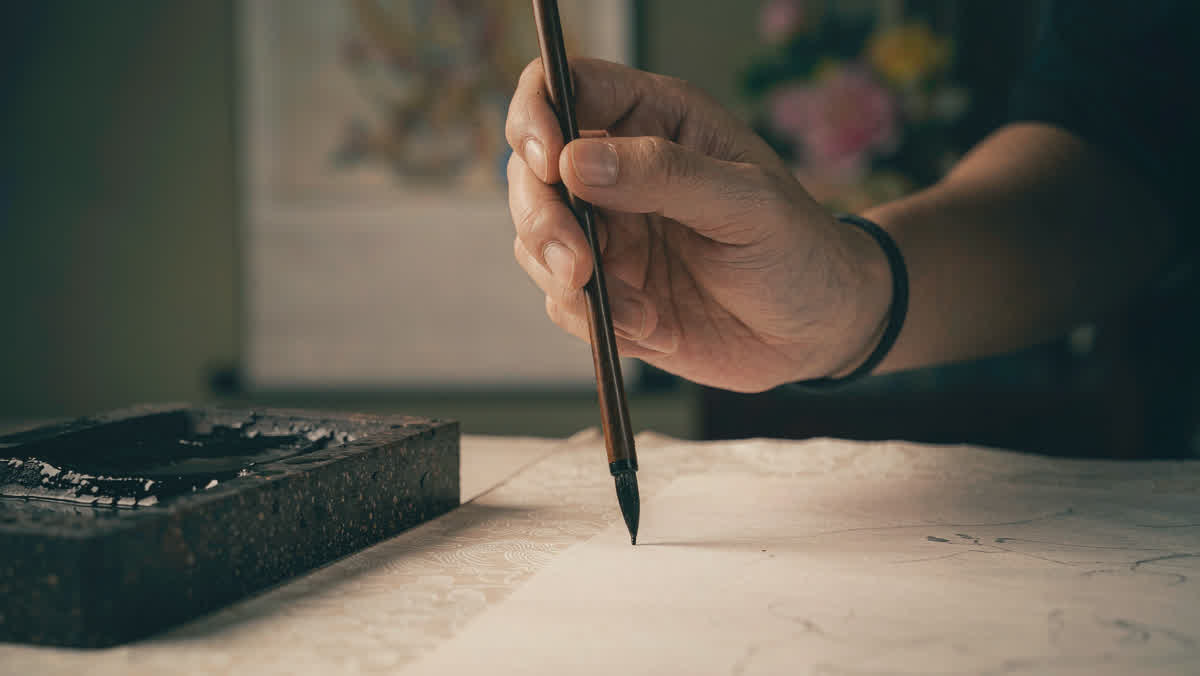
The Four Treasures of the Study
Traditional calligraphy needs four tools, known as the Four Treasures of the Study (文房四宝):
- Brush (bǐ) — soft, tapered, made from animal hair; flexible enough to produce both hairlines and broad strokes.
- Ink (mò) — traditionally an ink stick ground with water on an inkstone.
- Paper (zhǐ) — usually absorbent rice paper, which makes every stroke irreversible.
- Inkstone (yàn) — the stone on which the ink stick is ground.
The main script styles
- Seal script (篆书) — the oldest, rounded and ceremonial.
- Clerical script (隶书) — broad, flat and formal, used in official documents.
- Regular script (楷书) — the standard, balanced style taught to beginners.
- Running script (行书) — semi-cursive, flowing and personal.
- Cursive or “grass” script (草书) — highly abbreviated, expressive, sometimes unreadable to learners.
Why it is still alive
Calligraphy values the single, uncorrectable stroke: rhythm, pressure and breath are visible in the finished work. It connects modern readers directly to the hand of the writer, which is why it is still practised daily by people of all ages.
Where to see it: museum collections of rubbings from engraved stone steles, such as the Forest of Steles in Xi'an, preserve masterworks for over a thousand years.
Frequently asked questions
What tools does traditional calligraphy need?
The Four Treasures of the Study, 文房四宝: the brush, ink, paper and the ink stone.
Why is calligraphy still alive?
It values the single, uncorrectable stroke; rhythm, pressure and breath are visible in the finished work, which is why it connects modern people, not just historians.