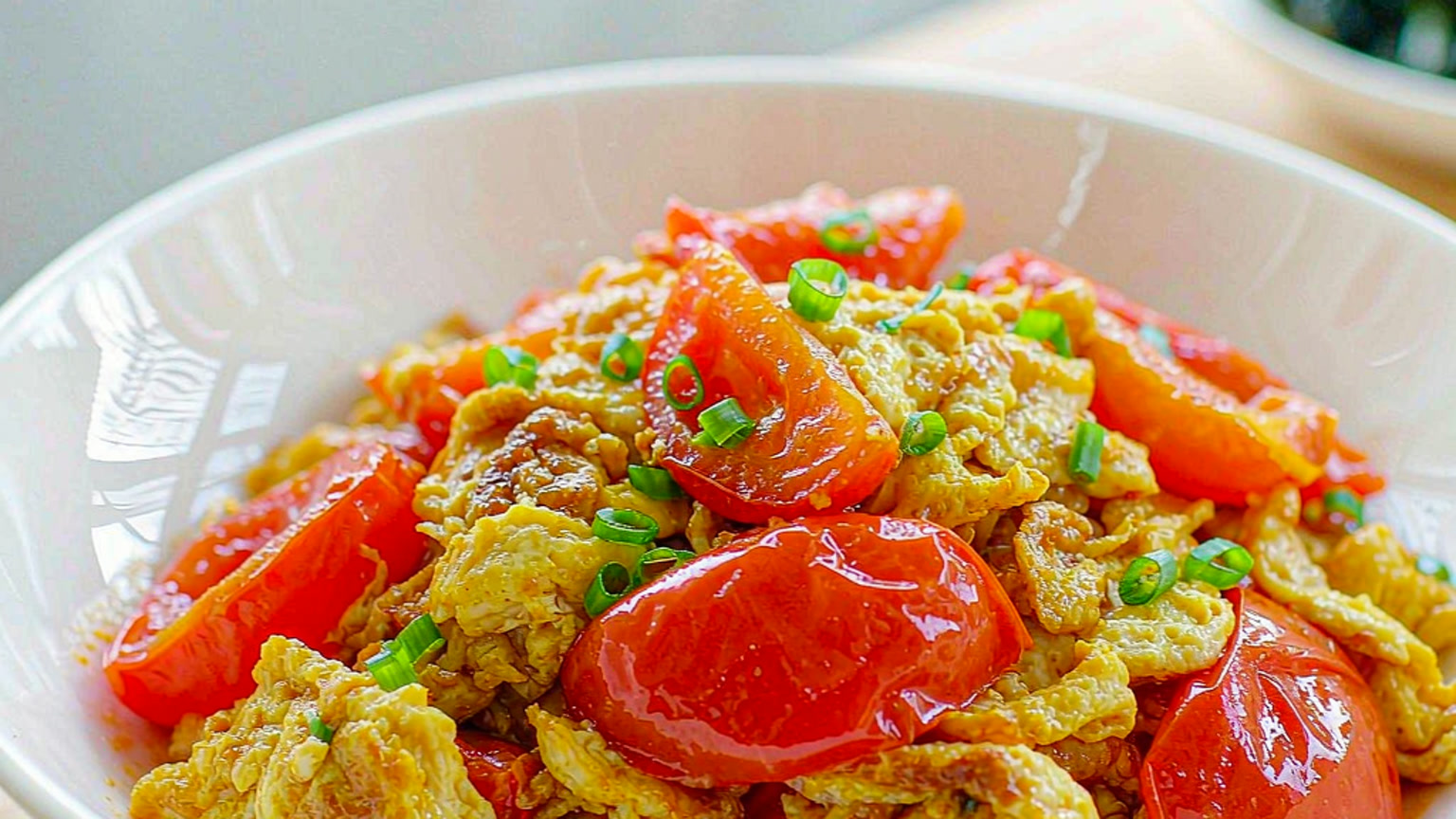
If Chinese home cooking has a national weeknight dish, this is it: tomato and egg stir-fry. It is the first thing most people learn to cook, the thing students make in a dorm kitchen, and the plate on the table when nobody wants to think. It takes about ten minutes and three ingredients you already have. The only reason it goes wrong at home is water — and there is a simple fix for that, below.
The dish that every Chinese home cook knows by heart
Ask anyone in China what they cooked first and the answer is usually this. It is cheap, fast, and forgiving, and it pairs with plain rice the way tomato sauce pairs with pasta. In restaurants it is a filler dish; at home it is comfort food. The Chinese name is 番茄炒蛋 (fānqié chǎo dàn), or 西红柿炒鸡蛋 in the north — the same dish under two regional words for "tomato".
Chinese tomato egg stir fry: the versions you'll actually see
The English phrase chinese tomato egg stir fry points to the same home dish the Chinese call 番茄炒蛋 (fānqié chǎo dàn) — but walk through a few real kitchens and the plate is never quite identical twice. A small pinch of sugar is almost automatic in the south, meant to take the edge off the tomato's sourness rather than make the dish sweet. In the north, plenty of cooks skip it and let the tomato speak for itself.
The bigger split is the sauce. Some homes want a loose, brothy bowl that soaks into the rice; others cook the tomatoes right down until almost nothing is left but a thick gloss. A common fix when the tomatoes are watery is a teaspoon of cornstarch slurry, which makes the sauce cling to the rice instead of pooling at the bottom of the bowl. While most people serve it over plain white rice, plenty of students pour it over noodles instead — same stir fry, different base. So when you look up chinese tomato egg stir fry or tomato and egg stir fry and recipes disagree, that's not a mistake; it's two households doing what they've always done. If you want another fast Chinese plate that pairs with the same rice, our egg fried rice is the natural next thing to learn.
What you need (for two, with rice)
- 4 ripe tomatoes (about 500 g), cut into wedges
- 3 eggs, beaten with a pinch of salt and a few drops of water
- 2 tbsp neutral oil (peanut or sunflower)
- 2 spring onions, whites and greens kept apart
- 1 tsp sugar — not for sweetness, see below
- 1 tsp light soy sauce (optional) · salt to taste
- 1 tsp cornstarch mixed with 1 tbsp water (only if your tomatoes are watery)
The sugar is the Chinese-kitchen trick for balancing the acid of the tomatoes. You are not making a sweet dish; you are rounding off the sourness so the egg reads as savoury.
Tomato and egg, step by step
- Heat your widest pan over high heat for a minute. Add 1 tbsp oil, then the eggs. Let them set for 10 seconds, fold into soft curds, and slide them out while still a little glossy. Do not cook them dry.
- Add the remaining oil and the spring onion whites. Ten seconds, until fragrant.
- Add the tomatoes and the sugar. Toss, then let them sit and cook down for 3–4 minutes until the skins wrinkle and a sauce forms.
- If the pan looks watery, stir in the cornstarch slurry and bubble it for 30 seconds — this is the step that stops a soupy plate.
- Season with salt and the optional soy. Taste; adjust.
- Return the eggs, fold once or twice to warm them through, scatter the spring onion greens, and serve immediately over rice.
Which tomatoes work? A quick comparison
| Tomato | How it behaves | Verdict |
|---|---|---|
| Ripe in-season, vine | Sweet, breaks down fast | Best — use 4 |
| Supermarket "salad" tomatoes | Firmer, less juice | Good, needs the sugar |
| Canned chopped | Already saucy, less fresh | Fine out of season |
| Cherry tomatoes | Sweet, hold their shape | Nice, but less sauce |
| Unripe / pale | Sour, watery | Avoid — the dish will taste flat |
The three mistakes that make it watery
- Crowding the pan. Too many tomatoes in a small pan steam instead of frying, and steam is water. Use your widest pan and cook in two batches if needed.
- Not cooking the tomatoes down. The sauce needs a few patient minutes on high heat. Stop early and you get tomato and egg soup.
- Salting too early. Salt draws water out of the tomatoes instantly. Season near the end, or thicken with the cornstarch slurry.
Two upgrades once you have the basics
Peel the tomatoes. Score the base, drop them in boiling water for 20 seconds, and the skin slips off. The sauce turns silky and the skins stop rolling around the plate — worth the two minutes when you have them.
Add a knob of butter at the end. It is not traditional, but it makes the egg taste richer and the sauce cling to the rice. A small upgrade that guests always notice.
What is tomato and egg called in Chinese?
It is 番茄炒蛋 (fānqié chǎo dàn) or 西红柿炒鸡蛋 (xīhóngshì chǎo jīdàn). Both names are used; 番茄 is more common in the south, 西红柿 in the north. It is the dish almost every Chinese home cook learns first.
Why is my tomato and egg watery?
Because the tomatoes released their water into the pan. Salt the tomatoes first and let them cook down until the liquid thickens, or add a pinch of sugar and a teaspoon of cornstarch slurry at the end to pull it together.
Do you need to peel the tomatoes?
Not for a weeknight version, but peeling makes the sauce silkier. Score the skin, drop the tomatoes in boiling water for 20 seconds, and it slips right off. Skip it if you are short on time; the dish still works.
Is tomato and egg healthy?
Yes, as written it is one of the lighter Chinese dishes — around 250 calories a serving, with protein from the eggs and lycopene from the tomatoes. Most of the fat comes from the oil, so keep it to about two tablespoons.
Can I make tomato and egg without eggs?
Yes. Soft tofu, crumbled and pan-fried until golden, stands in well, or use a firm plant-based egg substitute. Season a little more generously, because tofu is blander than egg.
Is Chinese tomato egg stir fry the same as tomato and egg?
They are the same dish. When English speakers say chinese tomato egg stir fry, they mean the home plate the Chinese call 番茄炒蛋, which is exactly what most recipes list as tomato and egg stir fry — the only difference is how much of the name you spell out. So if you find both terms while searching, you are looking at one recipe written two ways.
Two things make this dish: patiently cooking the tomatoes down, and never drying the eggs out. Get those right and it is dinner in ten minutes.