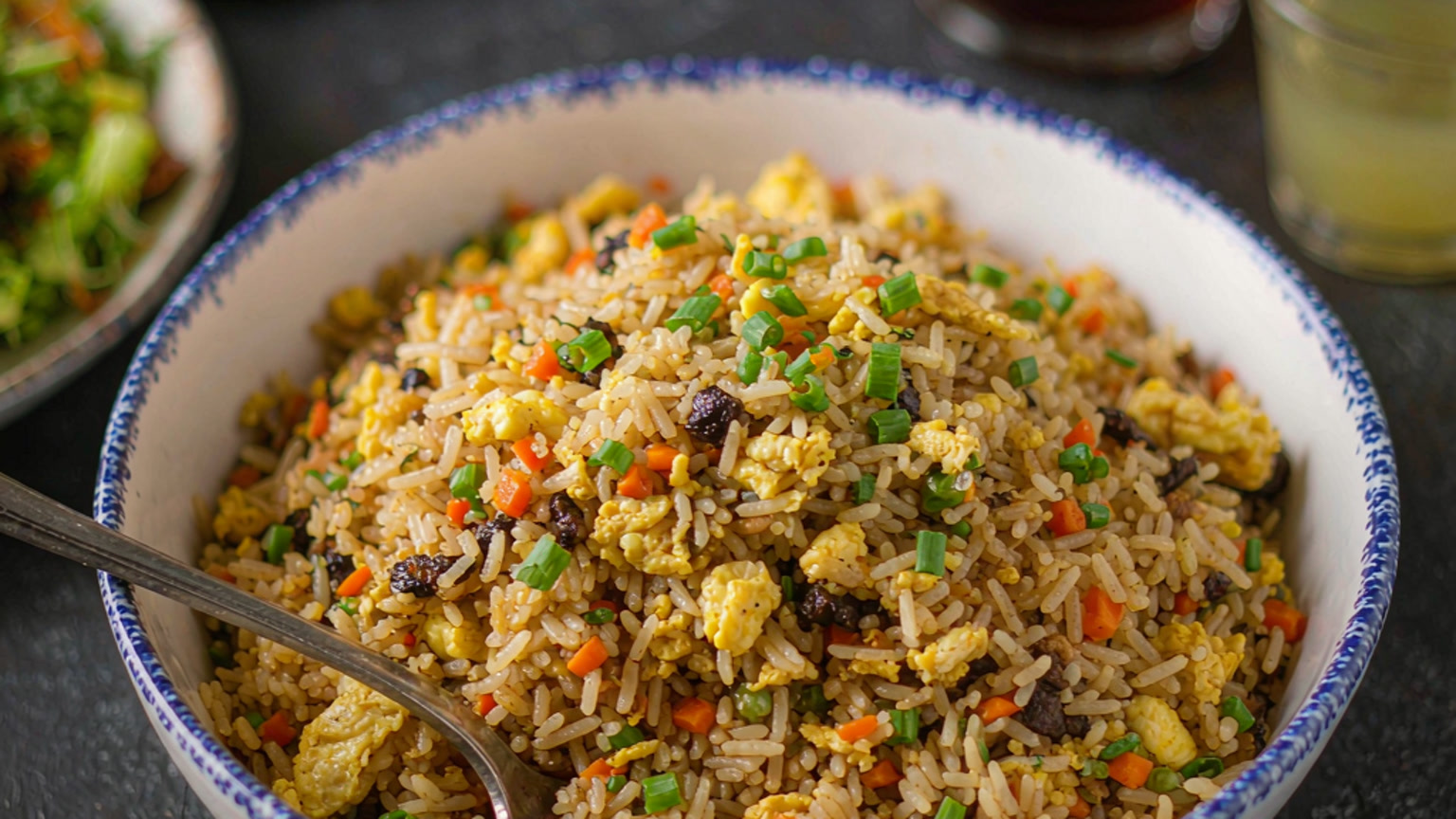
Egg fried rice looks like a five-minute afterthought and tastes like a restaurant dish if you get two things right: the rice and the heat. Everything else is flexible. Below is the version I cook most weeks at home — what to prep, the six-minute method, a quick comparison of which rice to use, and the three mistakes that turn a hot pan into a bowl of porridge. Read the first section and you already have the part most recipes bury at the bottom.
The one rule that decides everything: cold, dry rice
Fried rice is a stir-fry, and stir-fries want dry ingredients. Freshly cooked rice is covered in surface steam; drop it into oil and it steams itself into a sticky clump before it ever fries. Day-old rice from the fridge has already lost that moisture, so the grains stay separate and can actually toast. If you remember one thing from this page, remember this.
No day-old rice? Spread fresh rice on a tray in front of a fan for 20 minutes, or chill it uncovered for an hour. It is not quite as good — but it is far better than skipping the step.
What you need (for two generous bowls)
- 3 cups cooked cold rice (from roughly 200 g / 1 cup of raw rice, cooked the day before)
- 3 eggs, beaten with a pinch of salt
- 3 tbsp neutral oil (peanut or sunflower) — not olive
- 3 spring onions, whites and greens sliced separately
- 1 small carrot, diced small
- 1/2 cup frozen peas
- 1 tbsp light soy sauce + 1 tsp oyster sauce (optional)
- 1/4 tsp white pepper · salt to taste
Chop everything and keep it within arm's reach before the pan is hot. In a stir-fry this is not optional; by the time you turn to dice a carrot, the garlic is already burnt.
Egg fried rice, step by step
- Heat the empty wok, or your widest frying pan, over high heat for a full minute. It must be properly hot before anything goes in.
- Add 1 tbsp oil, then the eggs. Let them set for 10 seconds, break them into rough curds, and slide them out onto a plate while still slightly soft.
- Add the remaining oil and the white parts of the spring onion. Ten seconds, until fragrant.
- Add the carrot and peas; stir for a minute.
- Tip in the cold rice. Press it flat, let it sit for 20 seconds to catch some colour, then break it up and toss. Repeat for about 3 minutes — the grains should look glossy and you should hear them hiss.
- Push the rice to one side, add the soy and oyster sauce to the bare metal, let them sizzle for 5 seconds, then toss everything together.
- Return the egg, add the spring onion greens and white pepper, toss twice, and serve straight away.
Which rice works? A quick comparison
| Rice | Cooked texture | Fried-rice verdict |
|---|---|---|
| Day-old jasmine | Dry, separate grains | Best all-round pick |
| Day-old short-grain | Slightly sticky | Good if you handle it gently |
| Freshly cooked | Wet, clumpy | Only after fan-drying |
| Brown or wild rice | Firm, nutty | Works, needs more oil |
| Sushi rice | Very sticky | Avoid |
The three mistakes that make it mushy
- Cold oil in a cold pan. If the pan is not hot enough, the rice absorbs oil instead of frying in it — that is grease, not flavour.
- Too much liquid. Soy sauce is mostly water. Add it to the hot metal, not the rice, and never more than a tablespoon or two.
- Crowding the pan. If the rice sits more than about 2 cm deep, it steams. Cook in two batches rather than one big one.
Two upgrades once you have the basics
Add protein. Dice leftover chicken, char siu or lap cheong (Chinese sausage) and add it with the carrot. Both are the sort of thing a Chinese home cook keeps for exactly this.
Chase the wok breath. Crank the heat to maximum for the last 30 seconds and stop stirring. That faint char has a name — wok hei (镬气) — and it is the single thing that separates takeaway fried rice from a home version that tastes "fine".
Chicken fried rice: same method, one extra step
The jump from egg fried rice to chicken fried rice is smaller than the name suggests — the same pan, the same rice, and one added ingredient handled the right way. Use about 200 g of cooked chicken (leftover roast works best, or thigh meat diced small and cooked through first), and the real skill is when it goes in.
Add the diced chicken with the carrot and peas at step 4, and give it a minute to pick up heat before the rice follows. Raw chicken needs that contact time; pre-cooked chicken only needs to warm through, so it can join a little later. Keep the pieces roughly pea-sized so they scatter through the rice instead of clumping. This is also why most takeaways list the dish as "chicken fried rice" — the added protein is exactly what customers ask for, and it turns the simple egg version into the one people actually order.
If you start from raw chicken, season it lightly and cook it on its own for 30 seconds before the vegetables join, and let it sit at room temperature for ten minutes first rather than going straight from the fridge — the same cold-shock logic as the rice.
What kind of rice is best for fried rice?
Cold, day-old long-grain rice. Jasmine is the easiest to find and the most forgiving. Freshly cooked rice is the number-one reason home fried rice turns sticky, because the surface moisture steams the grains together before they can fry.
Why is my fried rice mushy?
Almost always one of three things: rice that was not cold and dry, a pan that was not hot enough, or too much sauce. Fix the rice first, then the heat, then cut the liquid.
Can I make egg fried rice without a wok?
Yes. Use the widest, heaviest frying pan you own and preheat it for a full minute. A wide flat pan actually gives more contact area than a home wok, which is exactly what you want.
Is egg fried rice healthy?
As written it is a balanced, moderate dish — around 400 calories a bowl, with protein from the eggs and vegetables from the peas and carrot. The main thing to watch is the oil; three tablespoons across two bowls is plenty.
How do I stop fried rice tasting bland?
Season in layers: salt in the eggs, white pepper in the rice, and a splash of soy or oyster sauce against the hot metal at the end. If it still tastes flat it almost always needs salt or a little acid, not more soy sauce — a few drops of rice vinegar will wake it up.
What is the difference between egg and chicken fried rice?
They share the same base — cold rice, egg and high heat — but chicken fried rice adds cooked chicken, usually diced small and stirred in with the vegetables. The method is otherwise identical; the only real difference is handling the protein so it heats through without steaming the rice. Egg fried rice is the quicker everyday version; chicken fried rice is the one most takeaways put on the menu.
Fried rice is a test of the rice and the heat, not the recipe. Get those two right once and you will never measure anything again.